Plantalk AI
Quick Diagnosis
| What you see | What it means | What to do |
|---|---|---|
| Wilting while the soil is still wet | Rotting roots can't take up water15 | Don't water. Check the roots. |
| Wilting, and the pot feels light | The plant is probably just dry5 | Water well. Very dry mix may need a soak5. |
| Older, lower leaves yellow and drop; the plant looks stunted | Possibly root rot, which can look like a nutrient shortage13. Low light, cold and overwatering cause this too4. | Check the mix and roots. See yellow leaves. |
| Brown or black, soft roots that may smell bad | Root rot125 | Trim the rot and repot, or start over. |
| Root skin slides off when pulled, leaving a thin thread | That root has rotted3 | Cut it back to firm, white tissue. |
| Brown or black ring around the stem at soil level | Rot has reached the stem2 | Root cuttings from healthy shoots5. |
| Firm, white roots, but the mix stays soggy | Too much water or poor drainage, but no rot yet24 | Let the mix dry more between waterings. Check that the pot drains. |
| Brown leaf tips or edges, healthy roots | Probably not root rot; salt buildup is one cause5 | See brown leaf tips. |
What Causes Root Rot
Roots need air as well as water. In waterlogged potting mix, water fills the air spaces and roots can drown6. Overwatering also favors root diseases2.
The main culprits are the water molds Pythium and Phytophthora and the fungi Rhizoctonia and Fusarium14. Water molds spread by swimming spores and are not true fungi4. Most of these organisms thrive in wet mix, and some survive a long time in soil or plant debris1. They can come from garden soil, reused mix, drainage water or infected new plants14. Fungus gnats can spread them too4.
Common reasons a mix stays too wet:
- Watering too often2.
- No drainage holes, or a pot left standing in water25.
- A pot much larger than the root system57.
- Old, compacted mix, or roots so crowded they block drainage47.
- Cold: wet mix plus cold temperatures often leads to root rot5.
Salt buildup from fertilizer is sometimes linked to root rot as well45. You can't tell by eye whether roots died from waterlogging or infection; it often takes a lab test36. By the time leaves show symptoms, root decay is often well advanced6.
How to Check the Roots
Check the roots whenever a plant wilts, before you water again45.
- Unpot it. Hold the main stems and lift while holding the pot down. If it sticks, lay the pot on its side or tip it upside down, cradling the root ball7.
- Feel and smell. Wet, foul-smelling mix at the bottom of the pot points to overwatering and rot5.
- Rinse. Wash some mix off so you can see the roots3.
- Compare. Healthy roots are white, at least under the outer skin, and firm rather than limp34. Rotted roots are brownish to black and soft, often starting at the tips234.
- Pull gently. If the outer layer slides off and leaves a thin, stringy core, the root has rotted3.
- Check the stem base. A brown or black ring at soil level means rot has reached the stem2.
Some plants have naturally brown roots, so judge texture and the pull test, not just color3. Only a lab can identify the organism36, so for a valuable plant or several sick plants, ask a plant clinic.
How to Save a Plant With Root Rot
A rescue works best when only part of the root system has rotted2.
- Unpot the plant as described above, without watering it first.
- Remove the old mix. Shake and rinse it off the roots3. Throw it away, along with any drainage water, since both can carry root rot organisms1.
- Trim the rot. With clean scissors or pruners, cut off every soft, brown or black root, back to firm, white tissue247.
- Judge what is left. If only a few roots were rotted, carry on. If most were dark, soft and dead, go to When to Start Over2.
- Disinfect tools and work surfaces with a 10% bleach or detergent solution, or alcohol1.
- Choose a clean pot with drainage holes. Use a new pot, or a clay pot scrubbed and rinsed in 1 part household bleach to 9 parts water12. University of Wisconsin–Madison specialists advise throwing out plastic pots that held a plant with root rot1. Pick a size that fits the remaining roots, since too large a pot invites rot5.
- Repot in fresh mix. Use bagged potting mix, never garden soil, and skip any gravel layer1. Set the root ball's top just below the rim, then fill and firm gently7.
- Water once, then wait. Water until a little drains from the holes7, then empty the saucer2. After that, give enough water to prevent drought stress, but don't overwater1.
- Give it time. Keep the plant warm and away from cold windows5. Skip fertilizer until it grows again, since excess fertilizer can also harm roots3. Dead roots don't recover; the plant must grow new ones3.
When to Start Over
UW–Madison specialists say throwing out a plant with root rot is often the best and most cost-effective choice1. Start over when most roots are dark, soft and dead2, or when rot rings the stem at soil level2.
If some shoots are still firm and free of rot, take stem cuttings from them and root them5. Use only stems with no dark or soft spots. Then discard the old plant, its mix and, if it is plastic, its pot1. Clean any tools and surfaces it touched1.
How to Prevent Root Rot
- Check before you water. Lift small pots: a light pot needs water5. A plant that wilts in wet mix needs a root check, not more water15.
- Use pots with drainage holes. Repot plants growing in pots without them5.
- Never leave pots standing in water. Empty saucers and decorative outer pots after watering12.
- Skip the gravel layer. Rocks or gravel in the bottom of a pot do not improve drainage. UW–Madison says they can actually inhibit it1.
- Size up gradually. A new pot should be no more than a third larger than the old one. For pots under 25 cm (10 in) across, go about 2.5 to 5 cm (1 to 2 in) wider and deeper7.
- Refresh old mix. Mix compacts as it ages, so repot every few years47.
- Use fresh potting mix, never garden soil, which often contains root rot organisms1.
- Keep plants away from cold drafts, especially when the mix is wet5.
- Go easy on fertilizer, and now and then run plenty of water through the pot to wash out salts345.
- Inspect new plants. Before you buy, slide the plant out of its pot and pass on any with discolored roots or stems14.
Watering needs vary by plant, so check the guide for yours: monstera, pothos, snake plant, fiddle leaf fig or peace lily.
How Plantalk AI Helps
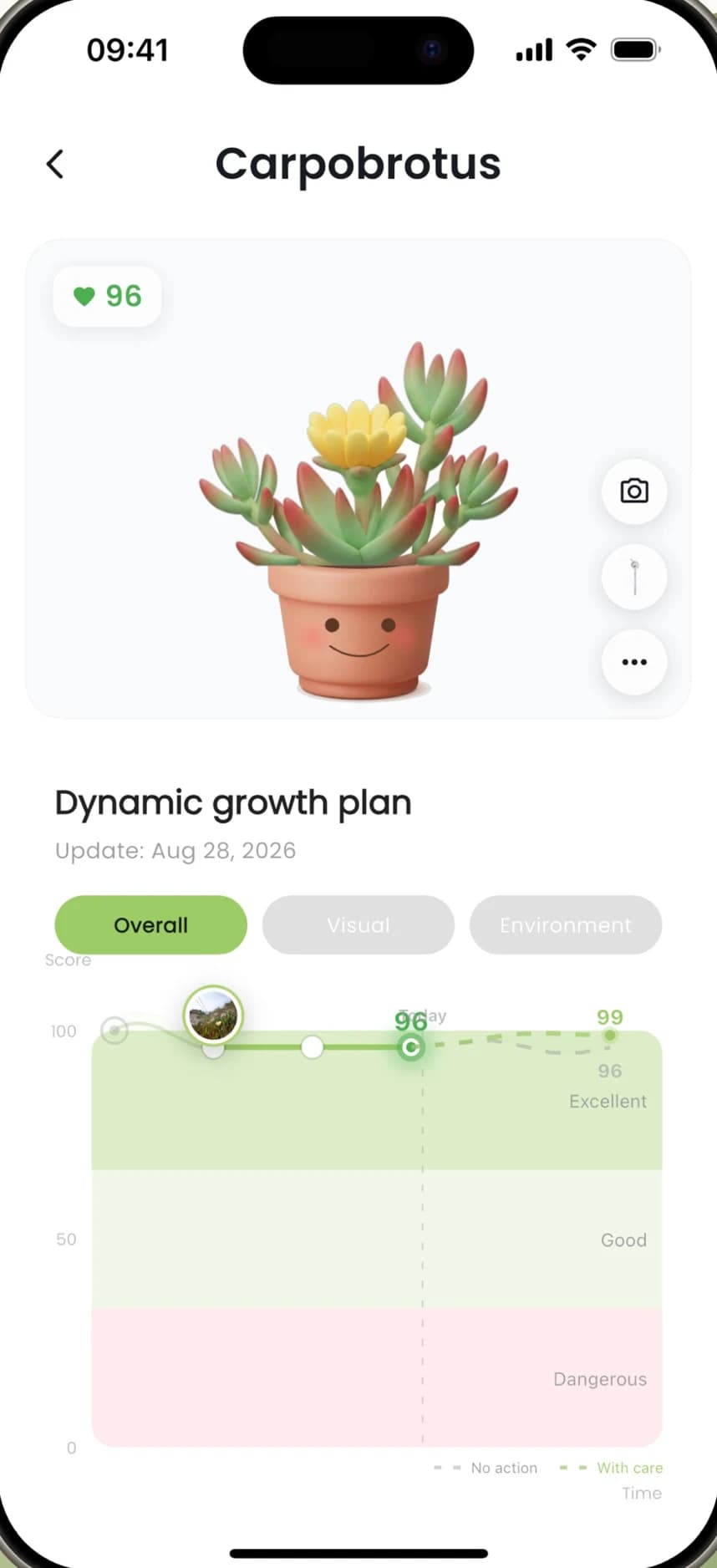
In Plantalk AI's plant health tools, you can send the Plantie Assistant a photo of a symptom, such as yellow leaves, for step-by-step answers. A Plantiemoji sensor, sold separately, shows live soil moisture readings in the plant's Environment view, so you can check the mix before watering. The Care screen lists what to water and check each day. The app's answers are guidance; for a serious disease problem, also ask a local nursery or plant clinic.
Common Questions
What Does Root Rot Look Like?
Rotted roots are brown to black, soft or limp, and may smell bad123. Their outer layer often slides off when pulled, leaving a thin thread3. Above ground, look for wilting in wet mix, yellowing leaves and slow growth1.
Can a Plant Recover From Root Rot?
Yes, if only a few roots are affected and you trim them and repot in fresh mix2. Dead roots don't recover, so the plant must grow new ones3. If most roots are dark, soft and dead, Clemson Extension advises discarding the plant, though healthy shoots may still root as cuttings25.
Is It Overwatering or Root Rot?
Often both: overwatering cuts the oxygen roots need and favors root diseases2. Roots killed by waterlogging can look just like roots killed by Phytophthora, and telling them apart often takes a lab test6. Either way, the rescue starts the same: check the roots, remove the dead ones and water less.
Do Hydrogen Peroxide or Fungicides Help?
UW–Madison does not recommend fungicides for houseplant root rot, because few products are sold to home gardeners and those are expensive1. In the UK, the Royal Horticultural Society says no chemical treatments are available to gardeners for Phytophthora root rot6. Fungicides work only against certain groups of organisms and cannot revive dead roots3. None of the sources behind this guide recommend hydrogen peroxide.
Sources
- Root Rots on Houseplants, University of Wisconsin–Madison Division of Extension (Wisconsin Horticulture)
- Houseplant Diseases & Disorders, Clemson Cooperative Extension, Home & Garden Information Center
- Fungal Root Rots and Chemical Fungicide Use, Penn State Extension
- Houseplant Problems, UC Statewide Integrated Pest Management Program, University of California Agriculture and Natural Resources
- Problems Common to Many Indoor Plants, Missouri Botanical Garden
- Phytophthora root rot, Royal Horticultural Society
- How to repot a plant, Royal Horticultural Society
About this guide. Drafted by the Plantalk AI team with AI assistance, checked against the sources listed on each page, and reviewed by an expert before publishing. Reviewed by Bingqing Qi, Wageningen University & Research, on November 9, 2026. Spotted something that needs fixing? Tell us.